Choosing a last-mile delivery partner: questions to ask
Interview the partner for the difficult stop, the damaged piece, and the customer who needs an answer, as well as the ordinary delivery.
The OrderPilot team·
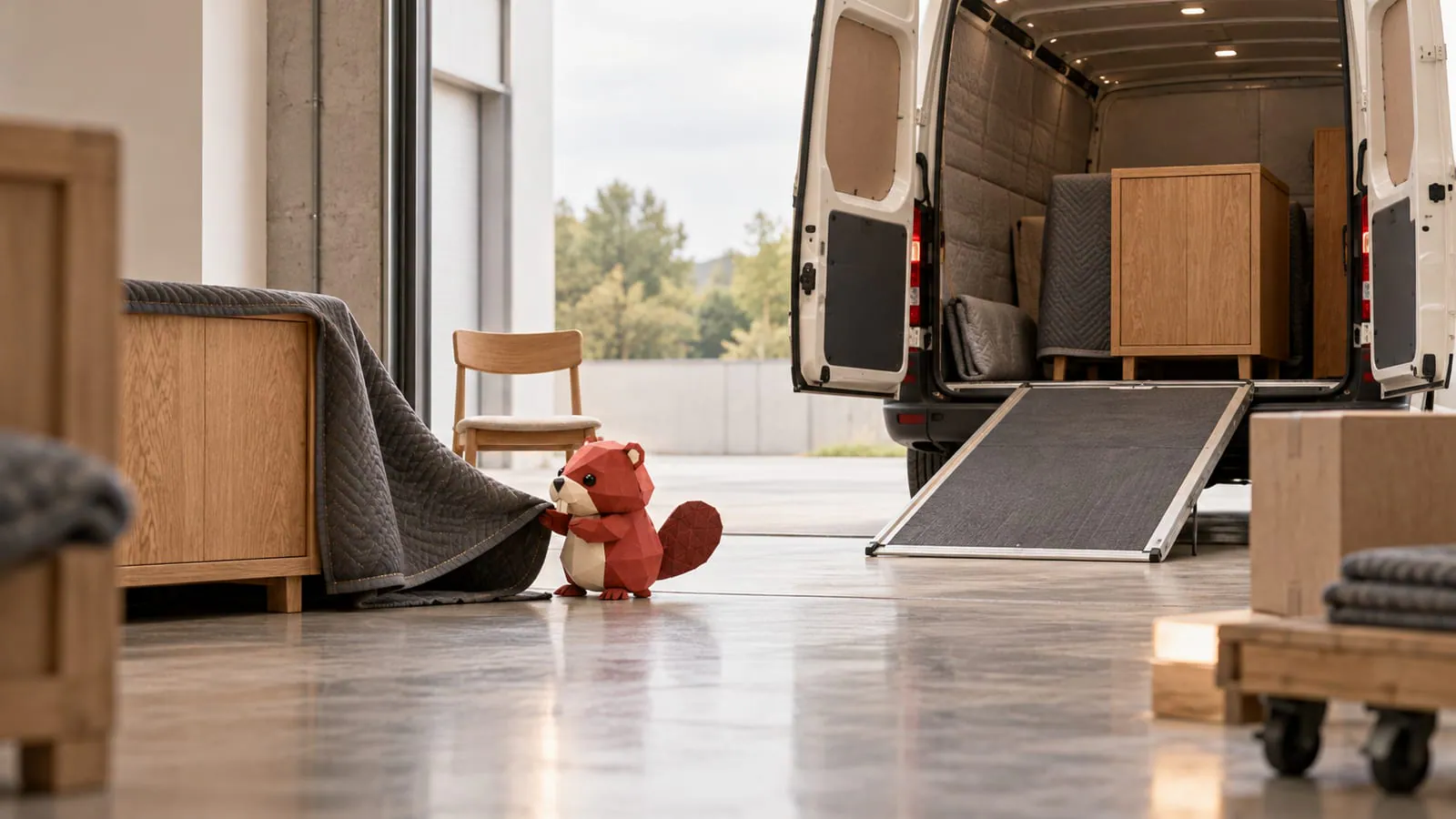
The piece your customer waited for will spend its final hour with people you may never have met. If they miss the window or leave the packaging behind, the customer will remember the name on the furniture order.
Choose a delivery partner by the service you can trust them to complete, including the difficult cases. The price matters, but so do handling, communication, and the response when the visit doesn't go to plan. Get those answers before the first load leaves your dock.
Decide what the partner needs to solve
Outsourcing can help with changing volume, a wider delivery area, or another showroom. An in-house crew can be worth keeping when the store depends on specialist product knowledge, consistent conduct, or close coordination with customers.
Define the work before comparing proposals. List the usual pieces, delivery area, service levels, access conditions, and seasonal variation. A partner pricing curbside cartons is not quoting the same job as a crew assembling case goods in an upstairs room.
Use the annual delivery planner to show when demand is likely to arrive. Give the partner the expected delivery workload resulting from each showroom promotion.
Identify what stays with your own team. Warehouse inspection, appointment changes, payment clearance, and claims follow-up still need owners even if the truck belongs to someone else. Outsourcing a route doesn't outsource the customer's relationship with the store.
Ask who touches the furniture
Trace the piece from pickup to final placement. Ask whether it stays with the same crew or changes vehicles, docks, warehouses, or subcontractors. Each handoff needs a condition record and an explanation of who is responsible.
A shipping-provider account of furniture handling describes a single-carrier, blanket-wrap approach as a way to reduce handoffs. That is a provider's description, not a guarantee of damage-free delivery. Use it to frame questions about the actual route your goods will take.
Ask the partner:
- Who loads and unloads at each stage?
- Where can a piece be stored overnight, and how is it protected?
- Does the same carrier complete the whole journey?
- Which work can be subcontracted, and how is the store informed?
- What packaging or blanket-wrap standard applies to each kind of piece?
Get specific about vulnerable furniture: polished wood, stone tops, pale upholstery, loose cushions, and removable legs. A blanket policy should describe the handling method, not merely contain the word blanket.
If the goods go directly from the maker to the customer, use the drop-shipping guide to clarify who controls pickup, condition records, and the final delivery instructions. The missing store-dock handoff still needs a clear replacement.
Ask how condition and damage are recorded
The partner should inspect at pickup and at the home, with a record that identifies the piece and any exception. Ask to see a redacted example of the paperwork and photographs from a completed delivery and a problem delivery.
Request performance figures with their definitions. A damage rate per item is different from a rate per stop, and a customer complaint rate is different from either. Ask which period the figure covers, whether subcontracted work is included, and how unresolved cases are counted.
Avoid comparing a polished percentage from one proposal with an anecdote from another. A credible partner can explain both its measure and the cases behind it. Ask who reviews recurring damage and what changed after the last preventable incident.
Establish the minor-damage process too. Who can authorize a repair, who performs it, and when does the customer hear the plan? The crew should record the problem rather than make an unauthorized promise or quietly attempt a cosmetic fix.
The delivery-day checklist supplies the store's standard for inspection and fair sign-off. Ask whether the partner can work to it before assuming its usual receipt records the same facts.
Review what the insurance and claims terms cover
Ask for the cargo-cover details and the contract provisions that determine responsibility. A certificate showing insurance exists doesn't tell you what a particular damaged sofa will recover.
Have your own insurer or counsel review limits, exclusions, deductibles, valuation, subcontractor arrangements, claim deadlines, and who handles damage to the customer's home. Distinguish cargo loss from property damage and injury; they are different questions.
Ask how a claim is filed, what evidence is required, who acknowledges it, and how disputed valuations are handled. Request the escalation route when the normal contact is unavailable. The customer should not be sent into an unfamiliar claims process without the store knowing what happens next.
Interstate freight can raise separate legal questions; the freight-claims guide covers that subject. Don't assume rules written for a household moving service automatically describe your retail delivery contract.
Agree who keeps the customer informed while responsibility is being decided. The store can acknowledge the report and organize the next action without prematurely promising a particular liability outcome.
Test the customer experience before promising it
Ask how the partner books windows, confirms access, and contacts the customer before arrival. Establish what happens when the crew knows it will be late, when nobody answers, and when a piece is refused.
The customer should know the partner's name where that prevents confusion, such as recognizing a booking call or the crew arriving at the door. Your paperwork can identify the delivery company and its role while making clear that the store remains the contact for the sale and unresolved service issues.
Give the customer a simple delivery-day contact plan. The partner can handle live arrival questions if that is the agreed arrangement; the store should have a visible escalation contact for missing pieces, damage, or a disputed service. Two phone numbers are useful only when their jobs are clear.
Review conduct and skills as well as appearance. Ask about floor protection, care around the home, supported assembly, packaging removal, and the response to an unsafe or impossible access route. A uniform doesn't tell you whether the crew can assemble the dining table.
Discuss a doesn't-fit case before it happens. The driver should know when to stop and whom to call. A customer shouldn't be asked to negotiate a hoist while holding the door open.
Agree the information exchange and total price
Set out how your store sends the order, configuration, service level, access notes, contact details, and any authorized receiver. The partner's return record must distinguish delivered, partially delivered, refused, and not attempted.
Agree when exceptions reach the store. A problem reported after the office closes can leave the customer without a response overnight. Define the urgent contact and the ordinary paperwork return separately.
Compare the complete cost. For an illustrative route, the store's fully allocated in-house day costs $1,200. A partner quotes six stops at $150 each, or $900, with $120 of access add-ons and $90 of store preparation and administration. The comparable total is $1,110 before any costs still omitted.
That $90 difference is useful only if the service and risk are comparable. If the store keeps its own truck and crew for other work, not every allocated in-house cost disappears when a route is outsourced. Separate avoidable expense from overhead that remains.
Put the interview outcome into the agreement
Before the first load, record the scope the partner accepted. Use this compact interview checklist as the contract handoff:
| Question group | Written outcome to obtain |
|---|---|
| Handling | Custody path, wrapping, storage, and subcontractor rules |
| Condition | Pickup and delivery inspection, photos, and exception records |
| Claims and cover | Valuation, limits, evidence, deadlines, contacts, and escalation |
| Customer experience | Windows, calls, conduct, assembly, removal, and access limits |
| Communication | Order transfer, urgent alerts, completion records, and ownership |
| Commercial terms | Base price, add-ons, failed attempts, storage, and review process |
Trial the agreed process with representative work before relying on a proposal's best-case description. Review the resulting paperwork and customer feedback with the partner. The dining chairs may all match; the delivery exceptions rarely do.
Keep the store's order record current
OrderPilot keeps per-line delivery methods and handover dates, carries named delivery charges, and supports customer updates as the order progresses; route planning and booking stay in the partner's own tools. Staff record the actual delivered quantities and keep the customer conversation attached to the sale, so the office can see what remains after a partial or refused delivery.
Use the delivery-day checklist as the shared standard for that final handoff.
Sources
- Reducing damage rates and returns on furniture deliveries — uShip, May 8, 2019; provider description of handling practices.
Interview the delivery partner for the visit that goes wrong, too.













