Extra terms by product: freezing the fine print at signing
Put the explanation with the piece the customer is buying, then preserve the terms they actually saw when they signed.
The OrderPilot team·

The customer calls about markings on the leather. Your associate remembers explaining the selected hide, and a laminated card beside the register describes natural variation. Neither tells the team what was on the agreement this customer signed.
Put the product-specific explanation on the quote and signing page, then preserve it with the signed record. OrderPilot can attach extra terms to a product template or category and freeze the terms at signing.
General information, not legal advice.
Which products need their own explanation?
Use additional terms where the customer's expectations depend on the particular material, specification, or condition. A general cancellation paragraph won't explain a leather finish or who supplies customer's-own-material.
These are illustrative drafting topics and plain-language starting points for legal review:
- Leather: “This selected leather can show natural variation. We'll identify the finish and discuss the sample's appearance before you order.” Describe the actual leather rather than claiming every mark on every hide is normal.
- Natural wood: “Grain and color vary between boards. The sample shows the finish, but it isn't a photograph of the exact boards in your piece.”
- Customer's-own-material: “The maker needs to approve the material before production. We'll confirm the required quantity and record who provides it.” Settle responsibility for unsuitable material separately.
- Floor models: “This is the displayed piece. The attached condition record identifies the marks discussed before purchase.” A generic label should not replace that record.
- Custom dimensions: “The order lists the approved finished dimensions. Any proposed revision needs review before the maker proceeds.”
The COM explainer develops the material handoff. A sample book can be wonderfully specific about color and surprisingly quiet about responsibility.
Where should the terms appear?
Put the explanation where the customer reviews the offer, before the signing action. A website policy or sign beside the register may support the conversation, but it doesn't by itself establish the content of this agreement.
OrderPilot's product and category terms appear on the related quote, order, invoice, and signing page. The store's team can maintain a common category explanation and a more specific product explanation without asking associates to paste paragraphs into every sale.
Review the combined wording on a sample order. A category clause and a product clause shouldn't make conflicting promises. The agreement-writing guide helps keep the complete document readable.
What happens when the clause changes later?
The signed record keeps the terms as they were at signing. Editing the template's clause next year doesn't rewrite the earlier customer's agreement. That is the point of freezing the content with the signature.
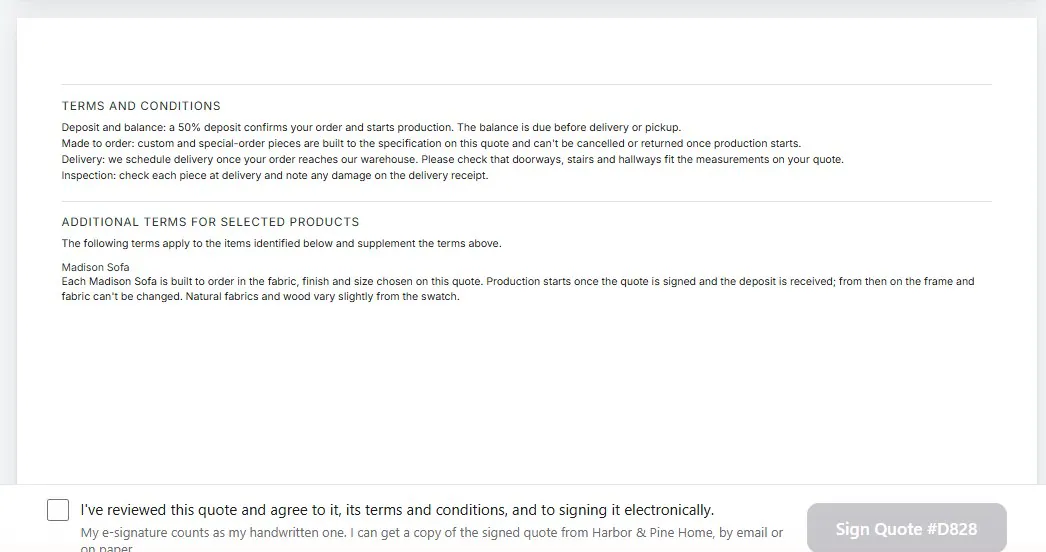
If the store wants to change an existing customer's agreement, treat that as a customer-facing revision requiring the appropriate approval. Don't replace the historic wording and describe it as what the customer originally accepted. The e-signature guide explains the evidence behind that distinction.
Can a clause make every special order non-cancellable?
No blanket phrase settles every transaction. The law, the actual goods, and the circumstances still matter.
A New York Civil Court decision in 2020 rejected the claim that a standard sofa model became substantially custom-made merely through an upholstery choice. In New Jersey, contract terms that conflict with the furniture rule's rights, including prohibited no-cancellation wording, are barred. N.J.A.C. 13:45A-5.3(c)
California's refund-policy posting statute excludes specified categories, including customized goods received as ordered and goods marked final sale. That is an exception to this particular posting rule, not a universal release from other duties. Civil Code §1723(b)–(c)
Use the custom-versus-special-order guide when reviewing those distinctions. Have your attorney turn the store's actual practices into appropriate clauses rather than borrowing a competitor's strongest-sounding exclusion.
Do the terms also belong on the receipt?
Receipt wording can reinforce the handoff, but it doesn't replace disclosures required on the agreement itself. OrderPilot supports short location receipt terms and a QR code to full terms on its POS receipt.
Review the location receipt settings alongside the quote. Revisit the topics when products, vendors, or store policies change, and schedule a regular wording review. Keep the old signed terms available while the next offer becomes clearer.
Sources
- N.J.A.C. 13:45A-5.3 — New Jersey Administrative Code via Cornell LII; amended January 17, 2012.
- California Civil Code §1723 — California statute via Public.Law.
- New York Civil Court decision, SCB-2747/2019 — June 30, 2020, reproduced by FindLaw.
The useful clause is the one attached to the piece and preserved with the agreement.













