Ocean freight for furniture: FCL, LCL, consolidation and what a 40HQ holds
Compare the full trip, measure the packed furniture, and give each piece its share of the freight. The cheapest container quote is only the beginning of the calculation.
The OrderPilot team·
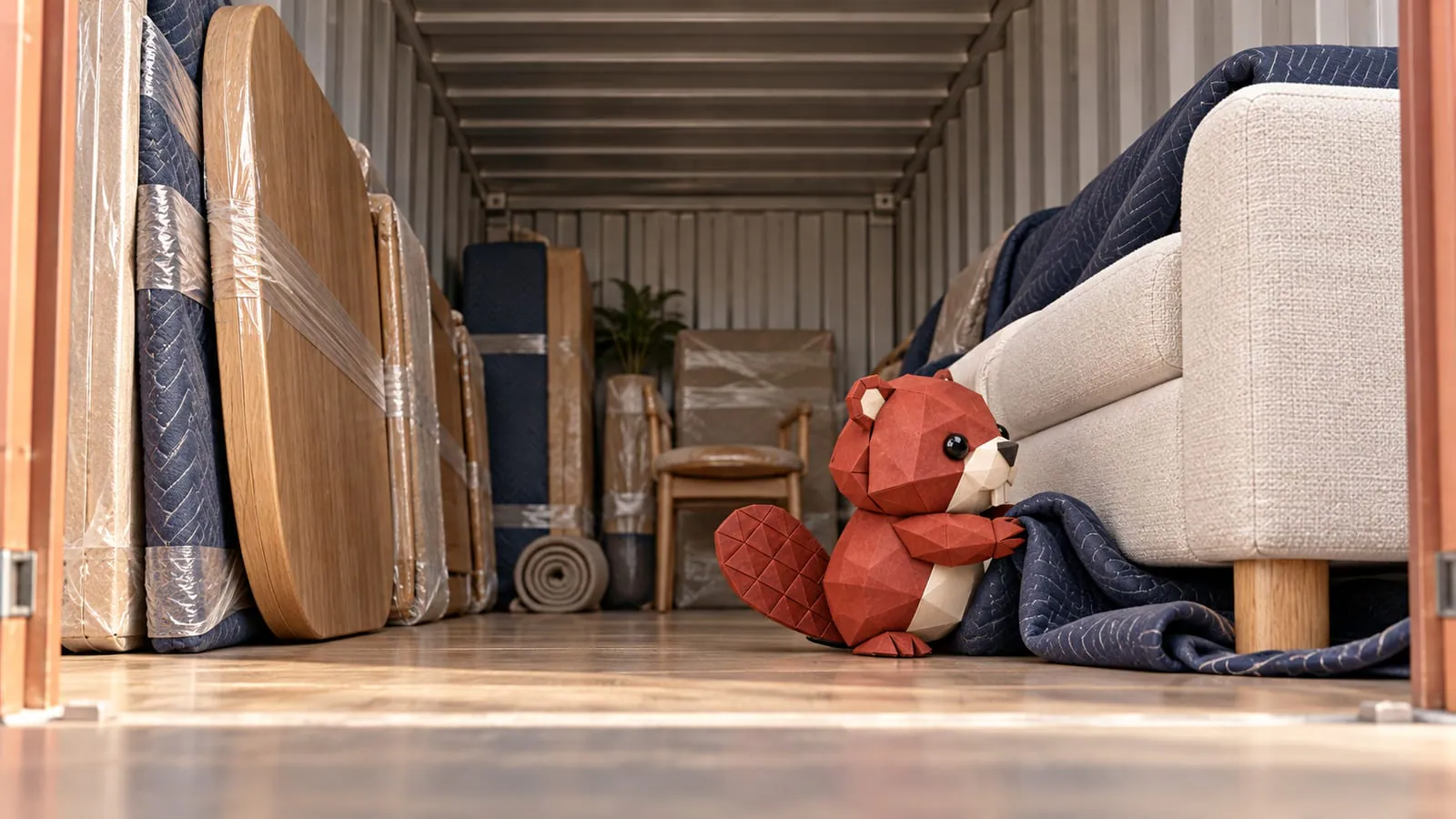
A container quote changes while the sofas are still being made. Say the ocean leg rises from an illustrative $3,000 to $7,500 on a $60,000 furniture purchase. Freight alone has moved from 5% to 12.5% of the merchandise value, before the trip from the port to the warehouse.
Ocean freight for furniture is a decision about space, timing, and the whole route. Choose between a dedicated container, a shared load, and consolidation using the actual packed goods. Then assign the resulting cost to the pieces that used the space, so the bulky sofa does not borrow margin from the small side table.
Choose the shipment type that fits the buying plan
FCL means a full-container-load service for the shipment; LCL means less-than-container-load cargo sharing container space with other shipments. Buyer's consolidation combines your purchases from several vendors before they move together. The best choice depends on how much is ready, where the vendors are, and how long the store can wait.
| Choice | A useful fit | Main question before booking |
|---|---|---|
| FCL | Enough ready furniture to justify dedicated container space | Does the complete load plan and door-to-door cost work? |
| LCL | A smaller shipment that should move without waiting for a full box | What are all origin, consolidation, destination, and delivery charges? |
| Buyer's consolidation | Several vendors' orders can meet at a common origin point | Who coordinates readiness, receiving, packing, and the final cut-off? |
FCL does not mean every cubic inch must be filled. A partly filled dedicated container can still be the better quoted option once handling, timing, and destination costs are compared. Equally, holding a customer order to fill the last space can cost more in service and storage than the saving is worth.
Ask the forwarder to quote the same goods under the plausible alternatives. Give each option the same collection point, delivery destination, readiness date, and required services. Otherwise the comparison may reward whichever quote leaves the most work outside its total.
Find the LCL crossover from quotes, not a magic volume
LCL stops making sense when its total price and operational tradeoffs compare poorly with the available dedicated option. There is no universal furniture cube at which that happens. Origin and destination charges, minimums, chargeable volume, weight, and service terms all influence the result.
An ocean provider's LCL terms illustrate why the charging basis deserves attention: chargeable units can depend on volume or weight, and base ocean rates exclude other charges. Treat those terms as that provider's rules, then ask your forwarder to explain the basis on your quotation.
For a comparison worksheet, suppose an LCL quote totals $4,500 to the warehouse while a dedicated-container quote totals $5,000 for the same scope. The difference is $500. Ask what the dedicated option changes in handling, readiness, delivery timing, and available space before deciding whether that difference is worthwhile. Those are proposed quotes for the example, not market rates.
If the dedicated option wins only after adding speculative stock, assess the stock purchase separately. A lower freight cost per piece is not a reason to buy furniture the store has no sound plan to sell.
Measure the furniture in its traveling clothes
Packed dimensions determine the space the shipment needs. A sofa's catalog width does not include its carton, protective corners, pallet, or crating. Ask for the packed length, width, height, gross weight, package count, and stacking restrictions for each ordered configuration.
Multiply the packed dimensions in meters to obtain cubic meters per package, then multiply by the number of packages. If a dining table travels as a top carton and a separate base, include both. If chairs nest or ship knocked down, use the vendor's actual packing specification rather than an optimistic showroom measurement.
Protective packaging has a job. Removing it merely to improve a cube calculation can change damage exposure and handling requirements. Ask the vendor and forwarder which packing arrangement is appropriate for the goods and route. The packing plan should work at the destination too, where someone must safely unload and identify the pieces.
The sofa has already chosen the comfortable option. Its carton will not become smaller through encouragement.
Use 40HQ dimensions as a limit, not a load guarantee
A 40HQ is a 40-foot high-cube container. A forwarder's representative specification lists internal dimensions of 12.03 × 2.35 × 2.70 meters, a 2.34 × 2.58-meter door opening, and 76.4 cubic meters of capacity. The page notes that actual equipment varies by manufacturer, age, and owner.
The door opening matters as much as the internal volume for an awkward crate. A piece that fits the imagined interior still has to pass through the doors in a permitted orientation. Send unusually tall or wide packages to the forwarder for a loading assessment before promising that they will fit.
Weight limits remain part of the plan even when bulky furniture appears likely to use the available space first. The same representative container lists a 28,560-kilogram payload; the actual equipment and transport route determine the usable limits. Have the forwarder approve the shipment's dimensions, weight distribution, and handling plan.
Answer “how many sofas?” with the actual carton
There is no dependable sofa count for a 40HQ without the model and packaging. A compact knocked-down sofa and an assembled deep sectional use very different space. Their permitted stacking arrangements can matter more than the difference in showroom width.
Suppose the planned load contains 20 sofas at 2.0 cubic meters each, 40 packed chairs at 0.2 cubic meters each, and 10 tables at 0.8 cubic meters each. The arithmetic gives 56 cubic meters. That is below the representative container volume, but it does not prove the load can be packed safely or that its shapes will fit together.
| Example goods | Quantity | Packed cube each | Total cube |
|---|---|---|---|
| Sofas | 20 | 2.0 m³ | 40 m³ |
| Chairs | 40 | 0.2 m³ | 8 m³ |
| Tables | 10 | 0.8 m³ | 8 m³ |
| Total | 70 pieces | — | 56 m³ |
Give the forwarder the full packing list, including non-stackable packages and permitted orientations. Leave the loading layout to the people responsible for packing and securing the cargo. An attractive spreadsheet total is a reason to examine a load plan, not permission to squeeze another sofa onto an unsupported carton.
Compare rates for the same route and service
A freight rate is meaningful only with its route, equipment, period, and included charges. Request the origin collection point, port pair, destination, currency, validity, sailing assumptions, and service scope. Keep the quote itself with the booking so later invoices can be compared with what was accepted.
Rates can change with available capacity, booking demand, congestion, rerouting, and the timing of the shipment. Ask the forwarder which factor affects this booking and what is actually secured. An index or market headline gives context; it does not reserve a container for your production date.
Avoid using a dated rate from one lane as the store's permanent freight assumption. For the example at the opening, a change in the ocean leg affects every piece sharing that cost. The freight-budgeting guide explains how to carry that uncertainty into quoting without pretending an estimate is a booking.
Decide between contract and spot arrangements from your schedule
A contract arrangement can help a store with a predictable program assess cost and service commitments over a period. Spot booking can fit less regular purchases. Ask what each offered arrangement actually commits the provider and store to, including volume, space, surcharges, cancellation, and changes in readiness.
For a showroom importing irregularly, the right question is whether its forecast is dependable enough for the proposed terms. A scheduled program of replenishment furniture differs from a collection of special orders that become ready whenever each factory finishes. Do not accept a volume obligation merely because the quoted base rate looks lower.
Ask the forwarder to compare both options against the store's likely shipments and a delayed-production scenario. Keep the comparison focused on the complete service. A contract with an attractive ocean rate may still leave variable local charges, and a spot quote may expire before the vendor can load.
Read FOB and CIF with the named place and edition
FOB means Free On Board; CIF means Cost, Insurance and Freight. Use the ICC's own Incoterms material and the agreed Incoterms edition to interpret the full obligations. The named port and the actual handover matter, not just the letters printed beside a price.
Under the ICC descriptions, both terms involve delivery on board at shipment; CIF also requires the seller to arrange carriage and insurance to the named destination port. That does not mean risk waits until the goods reach the showroom. Ask the forwarder whether a sea-only term fits your container handover or whether another term is more appropriate.
Put the chosen term, named place, edition, and any separate agreed services into the purchase paperwork. Avoid comparing an FOB merchandise quotation directly with a CIF quotation as though the difference were all product price. Identify which transport and insurance costs have moved between the parties.
Decide who arranges insurance and what it covers
The insurance decision should follow the sales terms and the shipment's actual exposure. Obtain the policy or certificate details, insured party, covered route, value basis, deductible, exclusions, and claims process. If the vendor arranges cover, the store still needs to understand how a claim would work.
The ICC's Incoterms 2020 explanation distinguishes the insurance levels associated with CIF and CIP and notes the default minimum cover for CIF. “Insurance included” therefore deserves a further question. Ask the insurer or forwarder whether the proposed cover fits furniture damage and the full journey involved.
Do not treat the carrier's liability arrangement as interchangeable with cargo insurance. Ask the service providers to explain the distinction for the booking and identify any gap between vendor collection and final delivery. Record who reports damage, what evidence is needed, and where the packaging must be retained while a claim is considered.
Budget the trip beyond the arrival port
The ocean leg ends before the furniture is ready for your delivery team. A complete estimate can include origin pickup, packing or consolidation, ocean freight, destination handling, customs services, port collection, inland transport, insurance, and receiving-related services. Ask which items the quote includes and which remain provisional.
For the ongoing example, suppose port drayage is budgeted at $1,000 and cargo insurance at 0.4% of the $60,000 merchandise value, or $240. These are planning assumptions. They are not representative quotations, and they do not include every possible charge. Keep them separate from the $7,500 ocean cost and any customs charges.
If the inland journey uses LTL, provide the packed dimensions, weights, and handling details needed to quote it accurately. The freight-class guide covers that separate leg. Use the customs-brokerage guide for the entry work and its documents.
Plan the warehouse handoff while booking the freight
Receiving capacity belongs in the transport plan. Establish the delivery address, access, unloading arrangements, appointment process, and who can accept the shipment. A container that reaches the area on schedule can still create avoidable trouble if the warehouse cannot receive it when required.
Ask about the collection and equipment-return obligations attached to the booking, including how the store will receive changes or delay notices. Get the charge basis for storage or extended equipment use before an exception occurs. The appropriate arrangement depends on the provider's terms and the actual route.
Give receiving the packing list and the customer-order references they need. If some pieces are stock and others already sold, separate those destinations in the preparation. The team should be able to record what arrived, what was damaged, and which customer commitments the shipment satisfies without guessing from the carton color.
Allocate space-driven freight from packed cube
For a shipment where packed space drives the transport cost, use each line's cubic meters divided by total cubic meters, multiplied by the charge being allocated. Keep the supporting packing worksheet. Different charges can use different bases where that better reflects what incurred them.
Using the 56-cubic-meter example and an $8,400 combined freight charge, the charge per cubic meter is $150. The sofas use 40 cubic meters, so they receive $6,000. Chairs and tables each use 8 cubic meters, so each group receives $1,200. The group totals reconcile exactly to $8,400.
| Example group | Cube share | Freight allocation | Freight per piece |
|---|---|---|---|
| Sofas | 40 ÷ 56 | $6,000 | $300 |
| Chairs | 8 ÷ 56 | $1,200 | $30 |
| Tables | 8 ÷ 56 | $1,200 | $120 |
An equal per-piece split would assign $120 to every piece, even though the packed sofas use much more space than the chairs. Quantity can work for similar units; it is less informative for a mixed load like this. The allocation guide compares the bases and rounding approach.
Keep duty and value-based charges on their own basis
The cube worksheet should not become a universal allocation rule. Duty follows the classified merchandise and the value relevant to that treatment. A value-based insurance premium may sensibly be allocated by insured value. Separate them from space-driven freight so the reason for each charge remains visible.
For a mixed shipment, preserve the broker's line breakdown and the transport invoice. Do not spread one product's tariff across unrelated products merely because they share the container. The Section 232 guide is related reading for that particular product-scope question.
Reconcile the totals at both levels: all allocated line amounts should equal the charge, and all charges should agree with the supported shipment cost. Where the invoice is still provisional, keep that status visible and assign the final review. A tidy allocation is only useful if it allocates the right amount.
Bring the freight into OrderPilot's purchase costs
Record ocean freight and drayage as purchasing charges on the OrderPilot PO. For a cube-based allocation, calculate the shares in the packing worksheet and enter them using Manual amounts; OrderPilot's available bases are value, quantity, and manual, rather than a native cube calculation. Review the resulting landed cost per line, then carry the accepted quantities through receiving. Attach the transport invoice and supporting worksheet to the PO so another colleague can reproduce the split. If a late invoice changes the actual charge, use a documented correction rather than leaving the estimate as the final cost. Standalone stock POs can cover planned replenishment that travels alongside customer orders. Keep each vendor purchase and customer commitment identifiable. For a shared freight invoice across several POs, allocate the total across those POs first, then allocate within each one, so the same container bill is not entered in full several times.
Consolidate around readiness, not just spare space
Combining vendors can improve the use of a container, but only if their goods can meet the planned cut-off. Record each vendor's ready date, origin location, packed volume, collection plan, and any storage needed at the consolidation point. A late component can change the economics for the whole load.
Decide in advance whether the ready goods will wait, ship separately, or move with a revised plan. Include customer promises and the cost of holding completed goods in that decision. The vendor-consolidation guide follows the coordination job in more detail.
After the shipment, compare the planned cube, booked cost, actual charge, and receiving result. Use that review to improve the next quote and packing estimate. A slightly less full container that arrives with the right furniture on the right terms can be more useful than a perfectly full one assembled from unwanted stock.
Keep this freight-planning checklist with the booking
- [ ] Actual packed dimensions, weights, package counts, and stacking limits collected.
- [ ] FCL, LCL, and consolidation alternatives compared on the same scope.
- [ ] Actual equipment, door opening, and loading plan reviewed by the forwarder.
- [ ] Vendor readiness and booking validity agree.
- [ ] Trade term, named place, and edition recorded.
- [ ] Insurance responsibility and coverage understood.
- [ ] Customs, destination charges, and warehouse delivery included in the budget.
- [ ] Receiving, collection, and equipment-return arrangements assigned.
- [ ] Freight allocation worksheet totals to the invoice.
- [ ] Actual landed costs reviewed after receipt.
For the next customer quote, carry the resulting per-piece estimate into the freight-budgeting guide. The container is shared space; the store still needs to know what each piece costs to bring home.
Sources
- High-cube dry container dimensions — DSV, forwarder equipment specification; representative equipment.
- Terms for Less than Container Load — Maersk, provider service terms; used for charging-basis context, not a universal rate.
- Incoterms and commercial contracts — International Chamber of Commerce.
- Incoterms 2020 — International Chamber of Commerce, 2020 rules.
Measure the packed furniture, then make the freight follow the space it uses.













