One quote for custom pieces, stock items and services
The sectional, the lamp, the warehouse rug, and the design time can share a quote. Each line still needs the right path through the store.
The OrderPilot team·

One customer, one Saturday: a made-to-order sectional, a lamp going home today, a rug from the warehouse across town, and some design time. In this example, the sectional takes 12 weeks and the design work is four hours. The lines share a total, but their next steps have very little in common.
Build one clear quote, then give each line its proper source and treatment. OrderPilot can hold configured pieces, Shopify catalog items, predefined sets, and services together. The customer reviews the purchase as a whole while purchasing and delivery work with the parts that belong to them.
Which kind of line belongs on the quote?
Choose a line type by what the store is selling and what happens afterward. A custom sofa isn't a service because it hasn't been made yet. Design time isn't stock because it has a price. Those distinctions determine what appears in purchasing and delivery.
| Line type | Example | What needs attention |
|---|---|---|
| Configured piece | Sofa in a chosen fabric and finish | Complete options, vendor, source, and expected timing |
| Catalog product | Shopify lamp or rug | Correct product, available location, and handover |
| Composition | Predefined modular-sofa set | The individual pieces added to the quote |
| Service | Design consultation | Scope, quantity, price, and terms |
Use the sets-and-services guide when building repeatable catalog choices. The quote should inherit a sensible structure before the associate is trying to remember which ottoman belongs with which sectional.
How does a configured piece reach purchasing?
The configured line carries the customer's chosen size, fabric, legs, and other options. When the sale is ready for purchasing, the PO workbench uses those details to prepare vendor work. The person buying the piece shouldn't have to translate “the blue one by the window.”
The source still matters. A configured piece sold from existing stock has a different future from the same configuration ordered new. Decide whether the customer is buying the available unit or waiting for a new one before promising a date.
OrderPilot's admin line shows the option-based lead time for made-to-order template lines. That estimate doesn't automatically print on the quote PDF or PO. State the customer-facing timing clearly where the customer will read it, and discuss any vendor confirmation still needed.
The PO workbench guide follows the approved lines into purchasing. Keep the quote's choices settled before that handoff.
How do stock items keep their own source?
A catalog lamp should point to the actual Shopify product and the location supplying it. On the showroom iPad, staff can distinguish stock here, stock elsewhere, and Order New. “We have one” is incomplete if the available lamp is across town or already committed.
For the sample rug, choose the warehouse source and agree whether it will transfer for pickup or go into the customer's delivery. For the lamp leaving today, record today's handover. A future sofa shouldn't make an already-collected lamp appear outstanding.
Stock allocation and the customer's delivery choice need to agree. A quote can describe an available item before the sale is committed; don't assume that typing it onto an exploratory quote creates an indefinite stock hold. Review the reservation position as part of moving the sale forward.
What if the customer wants everything delivered together?
Keep the lamp on a later-delivery path if the customer wants it with the sofa. Record the arrangement explicitly so the warehouse doesn't release it early and the associate doesn't pack it at the register.
The store also needs a holding policy: where the lamp waits, who watches the reserved stock, and how a longer sofa delay affects the arrangement. OrderPilot's per-line handover gives the order a place for the choice; staff still coordinate the actual delivery appointment.
The mixed pickup-and-delivery guide covers the case where the customer takes some pieces now and receives others later. One commercial conversation can still involve different handover dates and, where needed for tax or fulfillment, linked order parts.
What does a composition add?
A composition adds a predefined set of pieces from the Admin product picker. A modular sofa can arrive on the quote as its constituent sections without the associate adding each one from memory.
Those pieces remain individual lines. That helps with quantities, sourcing, and later fulfillment. A composition is not an automatic bundle-discount engine. If the store offers a set discount, apply the approved line or order discount deliberately and check the result when a component changes.
For example, removing a corner section may mean the customer is no longer buying the advertised arrangement. Review the price and room layout together. The software can preserve the pieces; the associate should still notice that the resulting sofa no longer turns the corner.
What makes a service line different?
A service product represents work rather than a physical piece to deliver. OrderPilot marks it as Service, excludes it from vendor purchasing, and gives it a separate place on the document. Design time shouldn't print as waiting for pickup.
A service can still form part of the customer's agreement and payment arrangement. Its service classification doesn't mean the store should skip scope, terms, or approval. Explain what the design fee covers, what is delivered to the customer, and when the work begins.
Signature requirements and payment terms belong to the sale's configured rules. If the store needs a deposit before starting design work, describe that arrangement clearly. OrderPilot deposit orders support deposits before placement on any Shopify plan when enabled; native percentage-deposit terms and minimum-deposit rules require Shopify Plus.
Why avoid anonymous Shopify custom items?
Shopify distinguishes catalog products from one-off custom items. Its draft-order documentation says custom items don't track inventory, don't appear in product sales reports, and don't work with automated fulfillment or shipping apps.
That makes an anonymous “custom sofa” line a poor substitute for a configured product the store intends to purchase, receive, and support. OrderPilot's configured catalog ties the piece to a real product while retaining the selected options. See custom items versus real products for the downstream difference.
If the product isn't set up yet, have the authorized catalog owner create the product or template and its vendor details before treating it as a repeatable sale. Catalog setup is separate work; don't expect the act of placing a customer order to invent the missing product structure.
What should the finished quote show?
The customer should recognize both the furniture and the work they've agreed to buy. Physical lines need the correct delivery or pickup arrangement; services need their own clear descriptions.
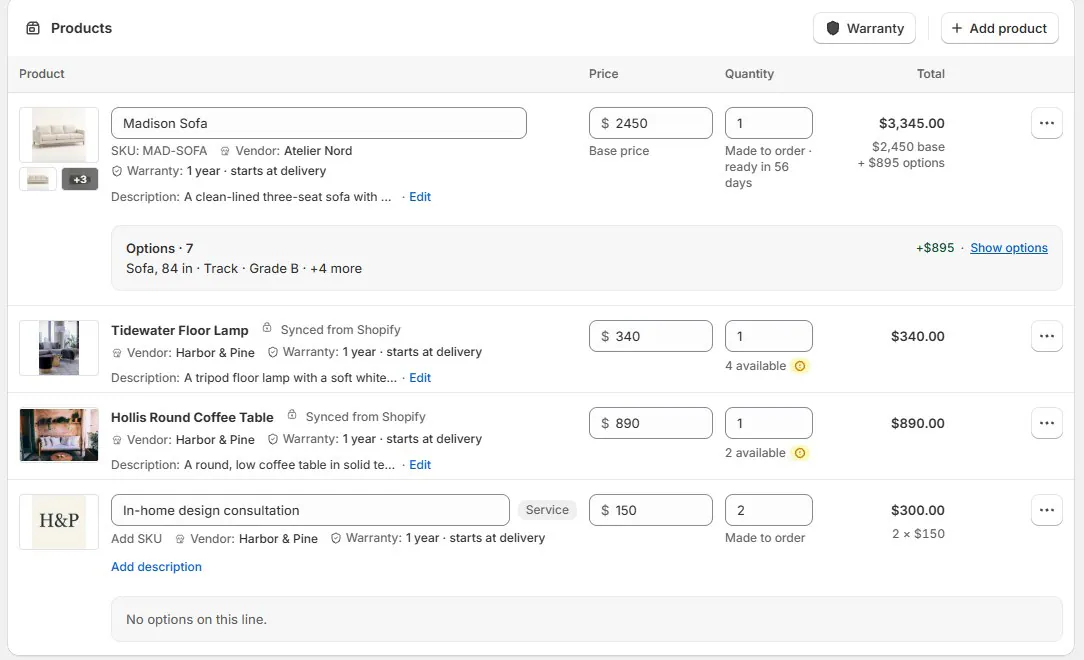
Before sending, read each line against a short checklist: correct type, correct source, complete specification, way home for physical goods, and a clear timing statement. Then confirm the total, agreement, and payment request cover the intended purchase.
For a customer taking the quote home, finish with the be-back playbook. The next conversation should start from this complete record, not from a separate scrap of paper about the lamp.
Sources
- Creating draft orders: custom-item considerations — Shopify Help Center.
One quote can hold the whole purchase without giving every line the same future.













