Good, better, best: price ladders that make your furniture floor easier to shop
Give each price step a reason the customer can see, feel, and explain at home. A useful ladder starts with a good sofa and makes every upgrade earn its place.
The OrderPilot team·
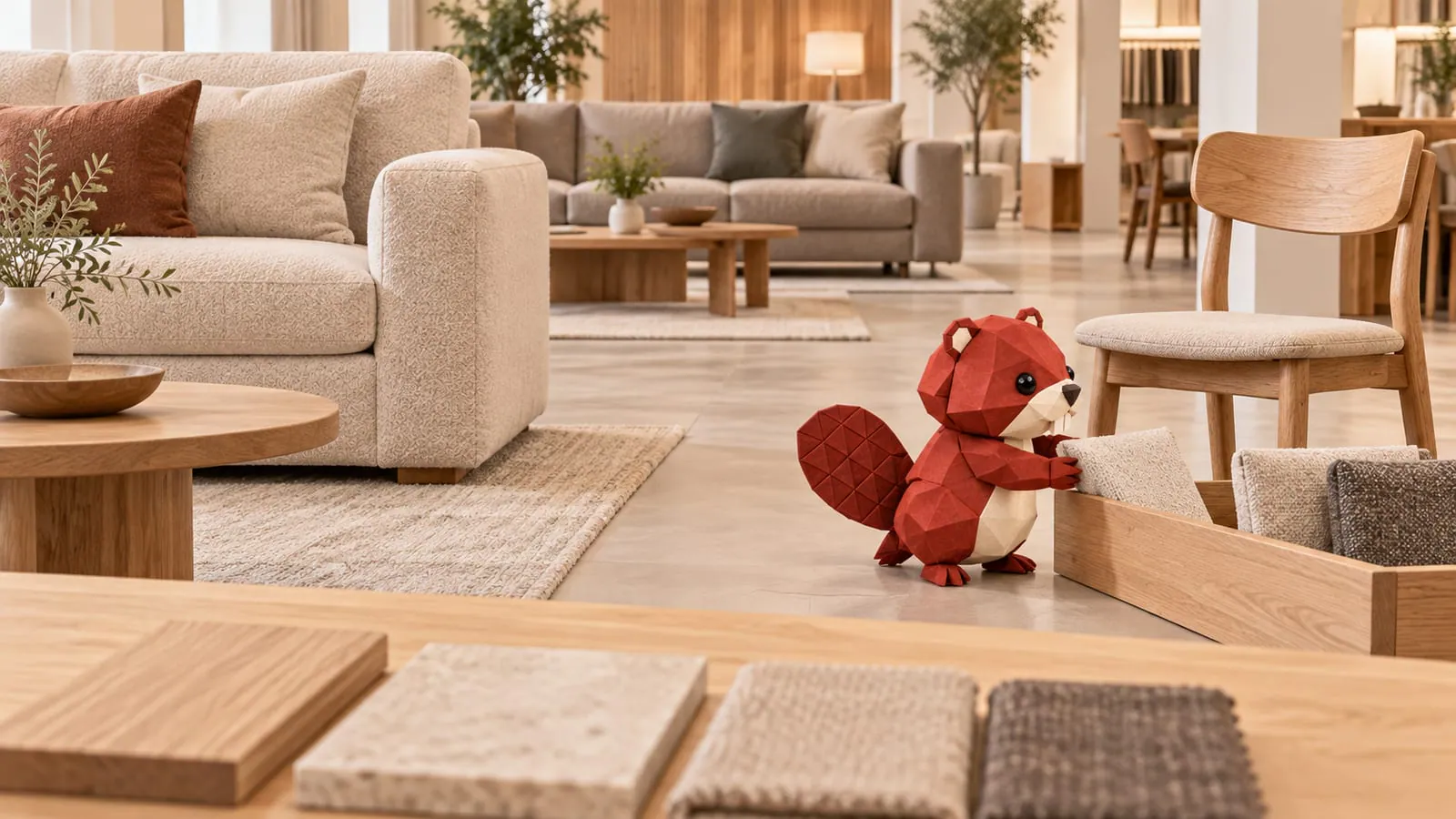
“Why is this sofa $2,400 and that one $5,900? They look the same.” The customer has a hand on each oatmeal cushion. From here, the expensive sofa appears to have acquired a very costly pair of legs.
A good, better, best furniture price ladder answers that question before the customer has to ask it twice. Each step should offer a useful, demonstrable difference, with a price your associate can explain plainly. The aim is to help the customer choose confidently, including when the entry piece is the right choice.
Build a ladder around the job the furniture does
A price ladder compares pieces that answer a similar need. Start with a category and a buying situation: an everyday family sofa, a compact dining table, or an upholstered bed. A small apartment sofa and a sprawling sectional do different jobs; arranging their price tags in ascending order does not make them a useful comparison.
Three tiers are an established retail approach. The research paper How to Brand Your Private Labels discusses economy, standard, and premium private-label programs. That gives the idea a useful foundation, but it does not establish the right price gaps or sales mix for your furniture store.
Your ladder needs a credible entry piece, a core piece that fits the customers you regularly serve, and a top piece with a reason to exist beyond its price. Treat this as part of running the whole furniture business, alongside buying, training, and service. A ladder that looks tidy on paper can still create trouble if the entry piece is always unavailable.
Write down the customer each step suits. The distinction might be comfort choice, dimensions, finish work, repairability, or the range of configurations. “For people who can afford more” is not a product explanation.
Give each step a difference worth demonstrating
Construction claims need actual vendor specifications. Ask about the frame materials and joints, suspension, cushion build, upholstery, finish process, and written warranty. Keep the answers beside the model number so staff are not borrowing a construction story from another collection.
Avoid turning one construction detail into a verdict on the whole piece. Frame and spring terminology helps associates explain what is inside; it does not replace sitting, inspecting, and understanding how the complete sofa is built. A customer might prefer a firmer, less expensive cushion to a softer premium option.
Here is an illustrative sofa ladder. The prices and specifications are invented for the exercise, not market benchmarks or claims about a maker.
| Step | Example price | Construction and choice | Customer-facing explanation |
|---|---|---|---|
| Entry | $2,400 | Documented frame and suspension; a fixed foam cushion; a focused upholstery selection | “This gives you the upright sit you liked without paying for choices you don't need.” |
| Core | $3,600 | Documented frame and suspension; a choice of cushion feels; more sizes and replaceable cushion inserts | “Here you can choose the sit and width, and replace the inserts later.” |
| Top | $5,900 | Documented frame and suspension; detailed tailoring; broader dimensional and cushion choices | “This is the step for a more specific fit and the tailoring you can see along the arms.” |
The top row is not permission to leave the entry row vague. If an entry sofa has good specifications, say so. Your lower price should still buy something the store is comfortable delivering and supporting.
Choose price gaps that your assortment can defend
The right gap is large enough to reflect a meaningful choice and small enough that customers can understand the next step. There is no universal furniture percentage that settles this. Start with the full selling price of comparable configurations, then ask what the customer receives for the difference.
In the example, moving from $2,400 to $3,600 costs another $1,200. The associate should connect that difference to the customer's needs: the narrower width that fits the room, a preferred cushion, or future insert replacement. If those benefits do not matter to this customer, the entry piece remains a sound recommendation.
Look for awkward overlaps. A heavily upgraded entry sofa can cost more than the core sofa in its standard upholstery. That is not automatically a problem, but the labels should not imply that every higher ticket buys better construction. Treat raising average ticket honestly as a consequence of a useful choice, not the purpose of every conversation.
Keep delivery charges, the displayed fabric, and optional upgrades clear. A ladder built from starting prices becomes misleading when the floor samples are all dressed several grades above them.
Separate the frame ladder from the fabric ladder
Made-to-order pricing needs two explanations: which furniture platform the customer is buying, and which options they have chosen. Start by comparing the platforms in a reasonably comparable upholstery level. Then show what fabric, cushion, size, and finish changes do to each quote.
A higher fabric grade does not automatically mean better durability or a better fit for the household. Explain the selected fabric's actual characteristics. A costly weave can be a beautiful choice without being the right choice for the customer's dog, maintenance preferences, or desired texture.
Keep a reference configuration for each floor piece. Staff should know the price as displayed and the price of the comparison configuration. When the customer changes the fabric, say what changed: “The frame and cushion are the same; this difference comes from the upholstery selection.”
That sentence prevents the store from accidentally selling fabric expense as a construction upgrade. It also helps the customer compare the finished quotes later, when the sample wall is no longer in front of them.
Make the differences visible on the floor
A construction sample and a clear card give the associate something concrete to discuss. Keep cutaways, cushion samples, and finish boards close to the pieces they describe. The customer should not have to follow a staff member to a drawer behind the office to understand the premium.
Use the same fields on every “what's inside” card. Here is copy you can adapt after checking the maker's specifications:
| Card field | Entry card | Core card | Top card |
|---|---|---|---|
| The sit | Upright, fixed cushion feel | Choose your cushion feel | Choose the cushion and dimensional fit |
| Inside | Name the documented frame, suspension, and cushion | Name the documented differences | Name the documented differences |
| As shown | Exact size, fabric, and finish | Exact size, fabric, and finish | Exact size, fabric, and finish |
| Worth seeing | Sit and try the arm height | Compare cushion samples | Look closely at tailoring and fit options |
Keep the card short enough to read while standing. Put the full technical detail in a sheet the customer can take away. A price tag should not require the concentration normally reserved for assembling a wardrobe.
For layout, try an approachable entry piece near the beginning of the shopping path, with the core and top pieces visible farther into the category. This is a merchandising suggestion to test in your store, not a guarantee about traffic. Keep the premium piece in company so shoppers can see what it improves on.
Use whichever vendors make the comparison honest
The steps can come from one vendor or several. A single maker can simplify samples and terminology if its ranges genuinely differ. Multiple makers can fill gaps when one vendor works at only one quality level.
Do not invent an internal ladder for a vendor that does not have one. Put that maker in the step it serves, then find a complementary piece elsewhere. The store owns the assortment logic. The vendor's catalog does not have to supply every rung.
Keep the comparison fair across brands. Use equivalent sizes and explain differences in warranty service, available options, and lead time. If you are developing private-label or exclusive collections, give them the same scrutiny. A store name on a tag is not a substitute for specifications.
Train the explanation, then audit the gaps
An associate should start with the customer's room, preferred sit, timing, and budget. Show the piece that fits those needs first. Introduce the next step with one useful sentence, then let the customer try the difference.
Practice with a colleague who asks awkward but reasonable questions: “Is this one actually stronger?” “Why does that fabric cost more?” “What am I giving up?” The useful answer names a documented difference or admits that the cheaper piece already meets the need.
Audit your five biggest categories as a working exercise. For each, list the entry, core, and top piece, the comparison configuration, the as-shown price, the demonstrable benefit, and any supply gap. Where the explanation is weak, change the assortment or the story before printing prettier cards.
Then take the next step: decide which pieces deserve showroom space. The ladder should be something your customer can walk through, sit on, and understand.
Sources
- How to Brand Your Private Labels — Inge Geyskens, Kristopher O. Keller, Marnik Dekimpe, and Koen de Jong; Business Horizons, May 2018. Publisher's description.
Every price step needs a difference the customer can see, feel, or use.













