Kiln-dried hardwood and 8-way hand-tied: frame and spring terms explained
Construction language describes parts of a sofa. Learn what those parts do, then connect the specification to the actual comfort and warranty.
The OrderPilot team·
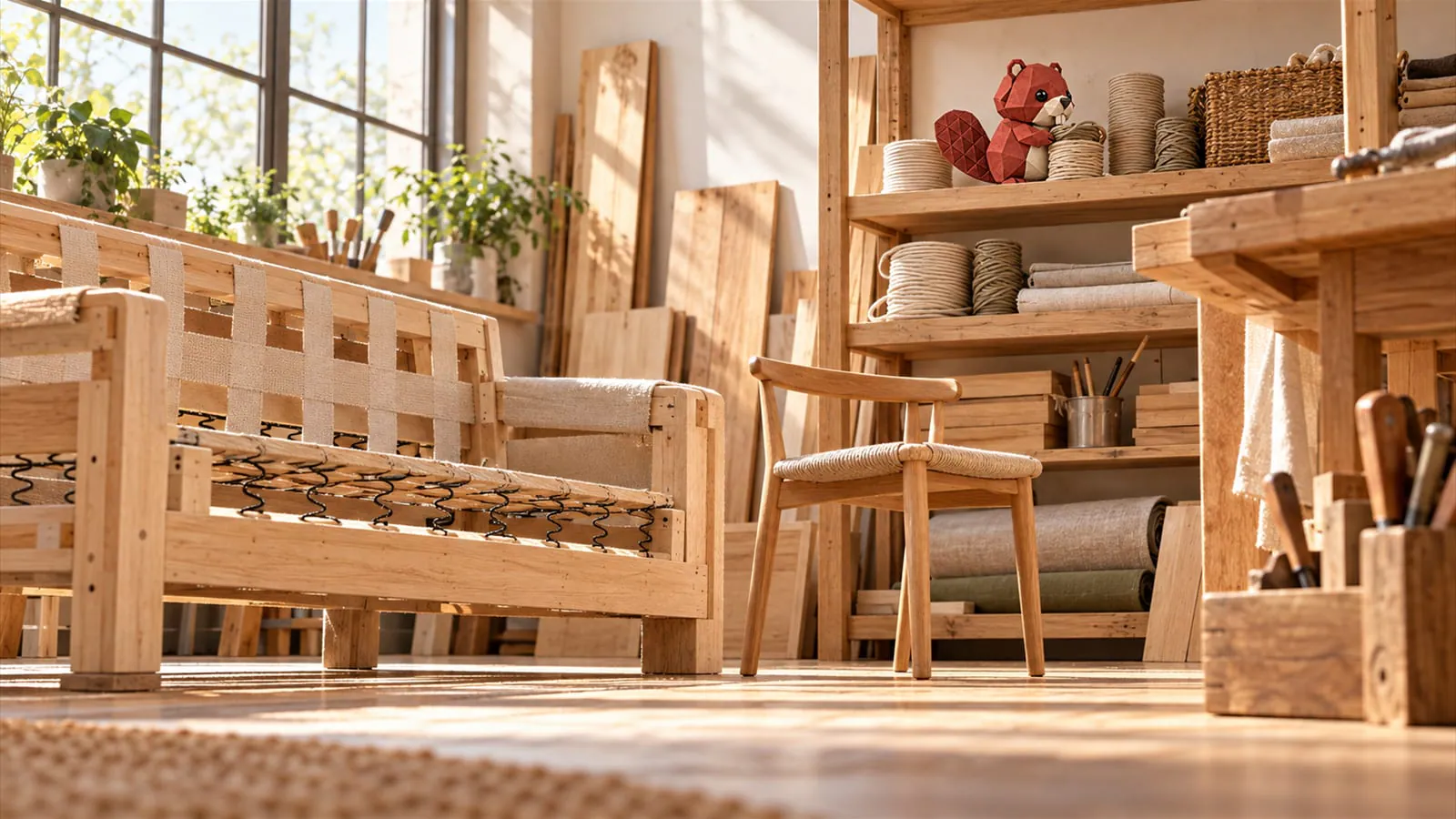
“Kiln-dried hardwood frame, eight-way hand-tied springs.” The tag sounds reassuring. The associate still needs to explain it. Kiln drying controls the wood’s moisture before manufacture; eight-way hand tying describes a method of securing upholstery coils with cord.
Those phrases identify construction choices, not a complete verdict on the sofa. The customer sits on a combination of frame, suspension, cushions, and upholstery. Explain what each contributes, then show the maker’s specification and coverage for the actual model.
What does kiln-dried hardwood mean?
Kiln drying uses controlled conditions to remove moisture from lumber. The aim is to prepare wood for its intended use and reduce problems caused by moisture changes after manufacture. The USDA Wood Handbook’s drying chapter explains the relationship between drying, moisture content, and dimensional change.
“Kiln-dried” does not mean wood can never move or absorb moisture again. Storage and the conditions in the home still matter. It also does not tell you the frame’s species, joinery, or design.
Ask the maker for a construction specification naming the materials and how they are prepared. An associate cannot confirm the moisture history of a concealed frame by pressing the arm and looking thoughtful.
Are plywood and engineered wood automatically inferior?
No. Plywood and other engineered materials describe a family of constructions, not a single quality level. The grade, thickness, placement, joint design, and intended load matter.
A frame can combine solid wood and engineered parts. Learn which material is used where, instead of treating “all hardwood” as the only meaningful description. The same care applies to joinery: dowels align and connect parts, glue bonds suitable joints, and corner blocks can reinforce the frame.
A maker’s construction explanation provides one example of doweled joints and screwed corner blocks. That describes its construction, not a requirement every sofa must copy.
What do the suspension terms mean?
The suspension supports the seat beneath the cushions. Its design affects how the seat responds when someone sits down.
| Term | Plain explanation |
|---|---|
| Eight-way hand-tied coils | Individual coil springs connected and secured by hand with cord in eight directions |
| Sinuous or serpentine springs | Shaped wire springs, often described as zigzags, spanning the frame |
| Webbing | Straps or bands forming a support surface beneath the seat or back |
Hancock & Moore describes its hand-tied coil method, while Barber Manufacturing shows sinuous spring designs. These are different ways to build support. Cushion material, seat depth, and the rest of the frame influence the final feel too.
Is eight-way hand-tied always better?
The phrase alone cannot rank complete sofas. Hand tying involves skilled labor, which can contribute to price, but workmanship and the design of the whole seat still matter. A poorly matched cushion does not become comfortable because the suspension has an impressive name.
Have the customer try the actual model and cushion choice. Explain whether the seat feels firmer, more yielding, or deeper in that configuration, without attributing every sensation to one hidden component.
For an illustrative comparison, suppose the customer prefers the firmer of two display sofas. Record the preferred cushion and model, then review their construction and warranty. Do not redirect the customer toward the other sofa solely because its tag contains the longer phrase.
How can you verify a maker’s construction claim?
Request the model’s written specification, a construction diagram, and the maker’s explanation of material preparation. For a kiln-dried claim, ask which components it covers and how the maker manages moisture before assembly.
Keep the answer with the catalog record. A general brand statement may not describe every sleeper, recliner, or sectional component. The product-data checklist helps distinguish model-specific facts from broad sales language.
For unfamiliar construction, ask the vendor representative to demonstrate a cutaway or sample. The goal is an explanation the floor can repeat accurately.
Why can frame coverage differ from cushion coverage?
Warranty terms can treat the structural frame differently from components that compress, soften, or wear during ordinary use. Read the maker’s actual promise, including what counts as a covered defect, instead of assuming every visible change is covered for the same period.
Keep duration, exclusions, and remedies attached to the right component. The warranty-by-product and option guide explains how to organize that information for a furniture catalog.
Where does the information belong in OrderPilot?
Use the product spec sheet’s Structure section to describe the frame and suspension in plain words. Keep those details aligned with the maker’s information. Where the optional warranty module is enabled, OrderPilot can hold the relevant product and option coverage and preserve the agreed terms on signed documents. Coverage starts from delivery of the piece. A branded spec sheet gives the customer something more useful than a memorized tag. Finish the showroom explanation with back and arm styles, so the visible choices are as clear as the construction underneath.
Sources
- Wood Handbook, Chapter 13: Drying and control of moisture content and dimensional changes — USDA Forest Service, Forest Products Laboratory; Richard Bergman.
- Craftsmanship and construction — Hancock & Moore.
- Sinuous springs — Barber Manufacturing.
Construction terms identify parts. The customer sits on the whole sofa.













