Lead times by option: when fabric choice changes the delivery date
Let the chosen fabric and finish inform the estimate, then allow for the journey from the vendor to your customer's room.
The OrderPilot team·

Same sofa, different fabric. In this illustrative order, the house linen is ready in 8 weeks, while the Italian velvet needs 12. The associate remembers “8 to 10,” and the customer hears it while holding the velvet. In week 11, the store gets the call.
Put the estimate on the option that changes it. OrderPilot uses the longest lead time among the chosen values, with per-template overrides where needed. Then your team builds a delivery window around that estimate, including vendor transit, receiving, and the customer's delivery appointment.
Why does lead time belong with the choice?
The same frame can have different timing with a different fabric, finish, or component. A product-wide estimate hides that difference just when the customer is choosing between alternatives. The catalog should make the slower choice visible before it becomes a surprise in the vendor acknowledgment.
Start by asking the vendor what its estimate includes and when the clock begins. “Ready to ship after order acceptance” differs from “fabric available to begin production.” Record the meaning with the source you use to maintain the catalog. Two figures measured from different starting points don't become comparable because both are written in weeks.
Make one person responsible for keeping those estimates current. A vendor's general update is useful background, but a notice about a particular velvet color belongs with that value. The wider product-template guide shows how price, cost, and lead time stay attached to the choices your team offers.
Why does OrderPilot use the slowest choice rather than adding them?
OrderPilot treats the option lead times as parallel waits and uses the longest chosen value. Adding every estimate could count the same production period more than once. The catalog model therefore needs comparable end-to-end estimates, rather than a mixture of separate production steps entered as though the app were a scheduling system.
The chosen base carries 56 days and the velvet carries 84 days. The line uses 84 days, not 140. If the vendor instead says material sourcing must finish before production starts, staff need to establish the resulting estimate and represent it appropriately. Don't enter sequential durations and expect the app to infer that dependency.
The slowest-choice rule also makes the customer's tradeoff understandable. If a different offered fabric brings the longest value down, staff can discuss that choice with the actual piece in view. The conversation remains about what the customer wants and when the store expects to deliver it.
Where do staff maintain the estimate?
Set lead time in days on each option value. Use a per-template override when that same value takes a different amount of time on a particular frame. The template page summarizes the slowest option, giving the catalog owner a way to spot a value that stretches the whole configuration.
A value with no lead time set contributes no wait to the calculation. That is a data gap, not evidence that the maker has the piece ready. There is no separate template-level base lead time to fill that gap automatically. Review empty estimates before offering the product, then give staff a value they can explain.
For a broader update, the catalog CSV supports Value lead time (days) and per-template lead-time overrides. Keep the vendor notice beside the working file and review the imported values on sample templates. A bulk update is still a commercial judgment about what the numbers mean.
What can the associate and customer actually see?
On a made-to-order line in Shopify Admin, staff can see a ready-in-days label based on the chosen values. A stocked configuration has a different practical route: it may already be available at a location. Use the exact configuration and stock information when explaining that distinction, as covered in merchandising made-to-order beside in-stock pieces.
On the website, enable Show lead time for the template to display the longest selected value in the options block. The display changes as the customer changes choices. Present it with plain wording that explains the estimate's meaning and its starting point, so a duration isn't mistaken for a booked delivery date.
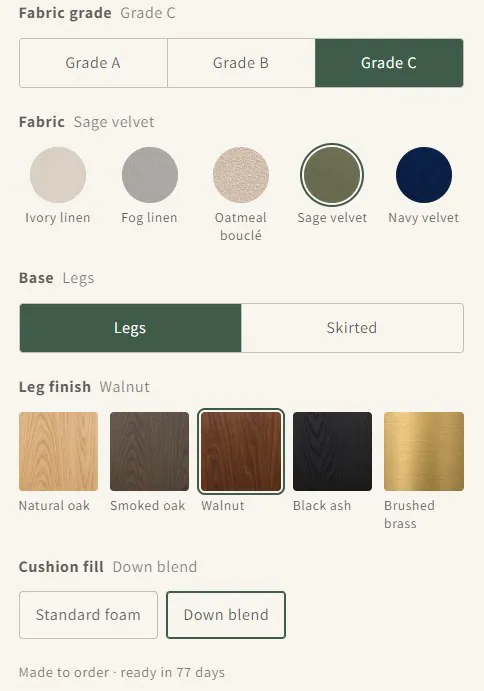
The option lead time doesn't print automatically on the quote PDF or PO, and it isn't displayed on POS or customer emails. Carry the agreed delivery window into the customer's written agreement and use the PO's Requested delivery date for the purchasing request. OrderPilot gives the team a consistent estimate on the Admin line and optional website display.
How do you turn readiness into a delivery window?
Build the window from the whole journey to the customer, not only the vendor's production estimate. Include the vendor's dispatch process, transport, your receiving check, and the available delivery slot. A sofa that reaches the dock still needs to reach the correct room, preferably without a debate about the elevator.
For a plan, allow 12 weeks to vendor readiness, 1 week in transit, and another week for receiving and delivery scheduling. That produces a 14-week planning estimate from the agreed starting event. If those later stages vary, communicate a reasoned range instead of presenting the earliest possible day as a commitment.
Write down the assumptions that could change the estimate. A customer's pending fabric approval, a maker waiting for material, and a confirmed production slot are different states. Give the customer a clear next update point, with someone responsible for checking the vendor before that point arrives.
On a mixed order, discuss whether the customer wants the ready pieces delivered first or the whole room delivered together. A stocked side table doesn't shorten the sofa's production time, and the sofa's slower fabric doesn't mean the table is unavailable. Record the chosen handover arrangement with the order. If the customer wants a combined delivery, build the window around the last required piece and the delivery slot, then explain which earlier arrivals the store will hold for that appointment.
New York's merchandise-delivery law requires a written estimated date or range for covered sales and excludes substantially custom-made or custom-finished articles from its furniture definition; the delivery-date law guide addresses scope separately.
What if the acknowledgment pushes the date back?
Compare the acknowledgment with the estimate and specification already sold. Establish whether the change concerns material availability, production readiness, shipment, or arrival. Then update the customer with the revised window and the decisions still open, using the vendor-delay communication routine.
Preserve what the store previously told the customer. Replacing a catalog estimate is useful for the next quote, but it doesn't explain an earlier promise. Keep the vendor response with the PO and the customer conversation with the order so someone else can pick up the issue without asking the customer to retell it.
What makes lead-time maintenance repeatable?
Review estimates when vendor notices arrive and when repeated acknowledgments stop matching the catalog. Separate a one-order exception from a recurring change. Update the affected values or template overrides, then inspect a fresh configuration and tell the showroom what changed.
Plan around known vendor closures before they affect open promises. The yearly lead-time planning guide covers Chinese New Year planning where your vendors' supply chains are affected. Use the actual maker's cutoff and reopening information instead of applying one calendar assumption to the whole store.
Keep the routine small enough to perform: source, meaning, owner, affected values, and customer follow-up. The next time the customer chooses the slower velvet, the associate can make that choice part of an honest delivery conversation.
Sources
- General Business Law § 396-u: Merchandise delivery — New York State Senate, revision September 22, 2014. See paragraphs 1(c) and 2(a).
Ready at the vendor and delivered to the customer are different dates.













