Leather types explained: full grain, top grain, aniline, semi-aniline, bonded
Separate the hide from its finish, then explain the care, character, and price the customer is choosing.
The OrderPilot team·
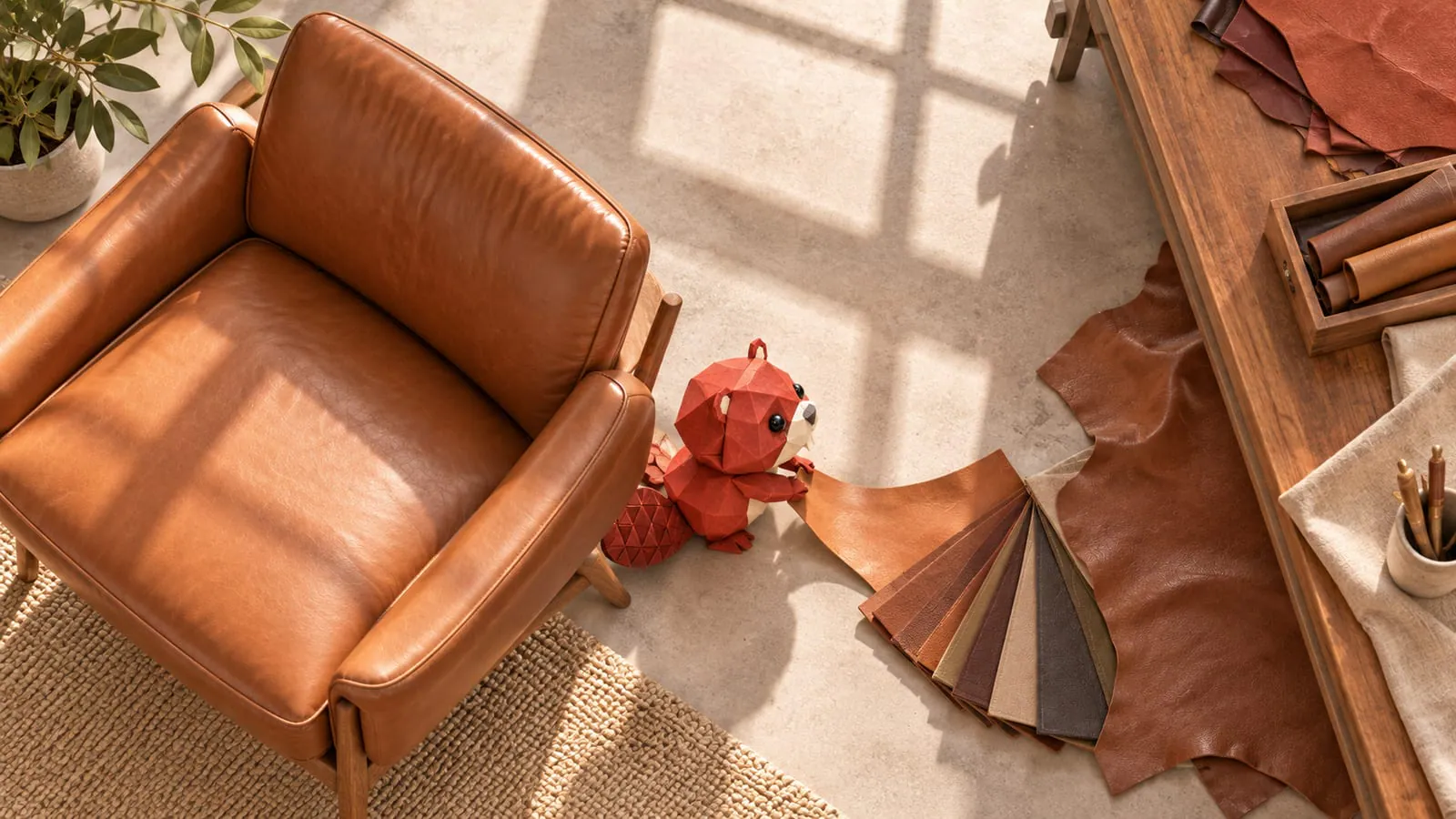
“Is it real leather?” leaves most of the useful questions unanswered. Leather descriptions concern both the hide material and its surface finish. Ask what the material is, how its surface was treated, and which parts of the furniture use it.
That conversation explains why a soft, expressive leather can cost more yet need more care. It also stops “leather” from doing all the work on a price card. A beautiful chair deserves a better introduction than a mystery in cognac.
General information, not legal advice.
What do full grain, top grain, split, and bonded mean?
Full grain retains the original grain surface without corrective removal. Split leather comes from a lower layer separated from the hide. Bonded material is made with leather fibers and other substances, rather than being an intact hide.
“Top grain” needs a follow-up question. Retail descriptions often use it for corrected leather, but the Leather Research Laboratory's terminology treats top grain and full grain as the same. Ask the vendor whether the surface is intact, corrected, or embossed instead of assuming that the name settles it.
| Material description | Ask the vendor | Explain to the customer |
|---|---|---|
| Full grain | Which finish is applied? | The natural grain is retained; care still depends on the finish |
| Top grain | Has the surface been corrected? | The term alone doesn't establish the surface treatment |
| Finished split | Where on the piece is it used? | A lower hide layer has been finished to resemble grain leather |
| Bonded | What is the stated composition? | This is a composite containing leather fibers |
The distinctions are useful because the customer is buying a whole piece. A leather seating surface and a different material on the outside back should be described by area, not merged into one vague claim.
What do aniline, semi-aniline, and protected describe?
The finish tells you more about the surface the customer will live with. FIRA's upholstery-leather guidance distinguishes the following treatments:
- Aniline is dyed without a surface color coating. It retains a natural feel and is more susceptible to light and liquid absorption.
- Semi-aniline has a thin surface coating. It combines some natural feel with added protection, while still needing care around spills.
- Pigmented leather has an opaque, colored surface finish. It generally offers greater surface protection.
Use those descriptions to ask about the room. Is the customer choosing visible character and accepting change with use, or hoping the upholstery stays visually uniform? Have them touch the samples while you explain. A finish name isn't a care instruction; send the exact leather's care sheet home with the choice.
For a piece combining leather and fabric, keep the fabric cleaning instructions separate from the leather care sheet so the customer knows which material each instruction covers.
Is top grain worse, and why can aniline cost more?
Neither a grain label nor a finish name ranks every leather from best to worst. Judge the specified material against the intended use. A corrected, protected leather can be a sensible choice for someone who values a consistent appearance and manageable care.
Aniline's price reflects the selection of hides suitable for an exposed natural surface and the feel customers value, rather than a promise of maximum resistance to marking. Set that expectation before the sale. The same reasoning applies when someone asks whether performance fabric is worth the upcharge: a premium needs a benefit the particular customer wants.
Can bonded material simply be called leather?
For the products within their scope, the US FTC Leather Guides reject presenting bonded material as unqualified leather. Section 24.2 describes composition disclosures, including leather-fiber and non-leather percentages when “bonded leather” is used.
The guides' stated scope lists products such as luggage, handbags, footwear, belts, and similar articles; it does not specifically list furniture. The text's source is October 3, 1996. Don't present it as a furniture-specific labeling rule or infer a new rule from a review notice.
For furniture copy, obtain the maker's composition statement and describe the actual material and where it appears. Check with your attorney on the wording required for your products and jurisdiction. Clear composition information lets the customer compare like with like.
Keep the actual leather choice in OrderPilot
Name each leather option by its vendor identifier, material description, finish, and color. Give the value its own price, cost, and lead time. Add plain descriptions so the associate can explain the difference without relying on a memorized sales shorthand.
Say the example chair is $2,000 in a protected leather and $2,400 in an aniline leather. The $400 difference should buy a stated choice, with the care expectations explained before approval. Add the relevant care terms to the quote. Keep customer's own leather as a separate choice with its approval and supply details. It is a different purchasing arrangement, not another finish. Use product templates to keep those choices consistent from the showroom conversation to the agreed specification.
Sources
- Scope and purpose, 16 CFR § 24.0 — Federal Trade Commission regulation, Cornell Legal Information Institute, source text October 3, 1996.
- Deception as to composition, 16 CFR § 24.2 — Federal Trade Commission regulation, Cornell Legal Information Institute, source text October 3, 1996.
- Leather types, characteristics and maintenance — Furniture Industry Research Association.
- Full grain and top grain — Leather Research Laboratory.
Name the material, explain the finish, and show where it is used.













