Lighting a furniture showroom: layers, color temperature and true fabric color
Give the room atmosphere and the samples honest viewing conditions. A good lighting brief addresses both.
The OrderPilot team·
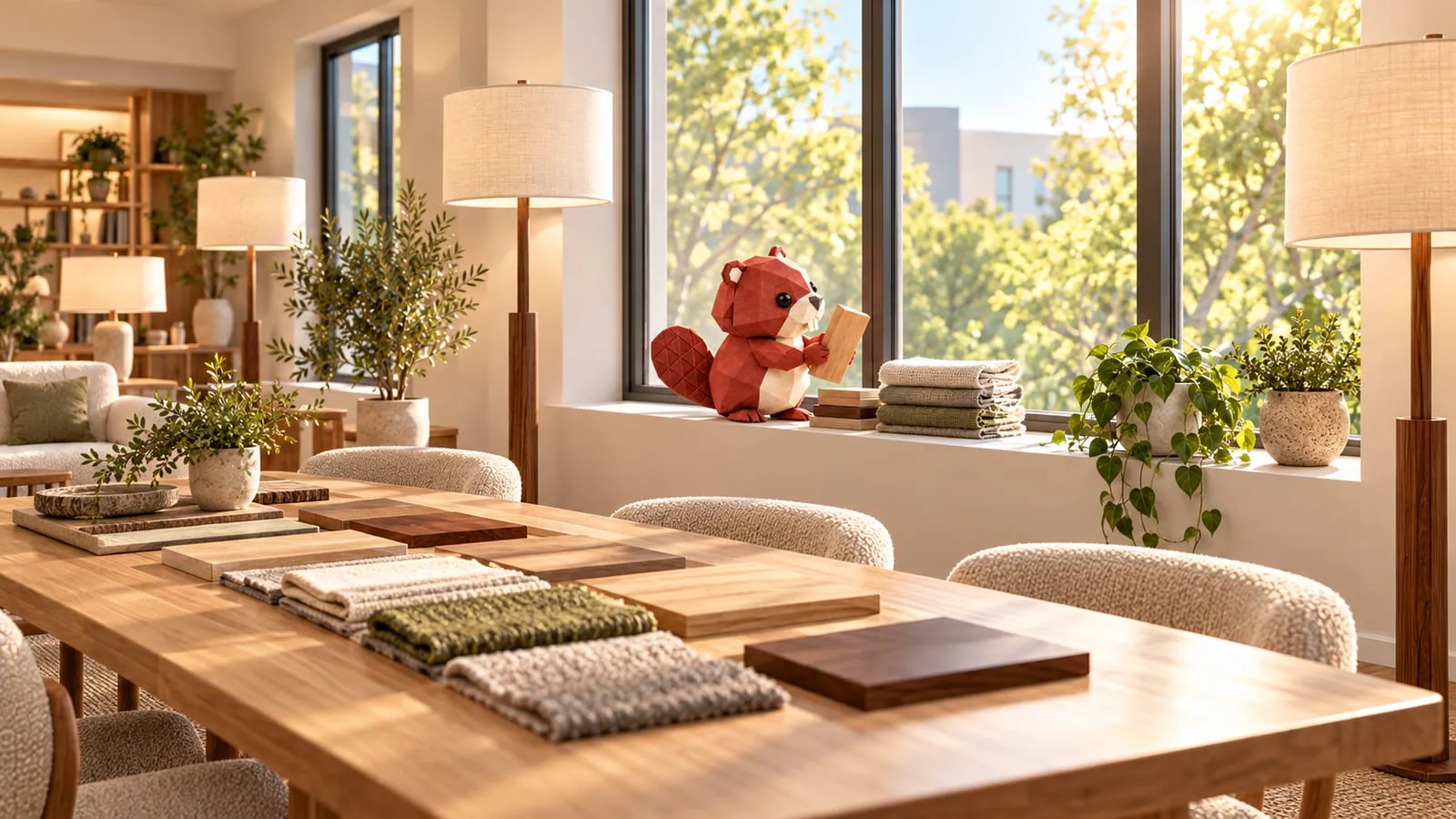
The customer loved the warm oatmeal linen in the showroom. At home, beside north-facing windows and cooler lamps, it looks gray. She calls it the wrong fabric. The first task is still to verify the fabric identifier, but the showroom's light may have helped create the expectation.
Light a furniture showroom for both seeing and choosing. General, accent, and decorative light should work together, while a consistent sample-viewing area helps customers compare fabrics and finishes. No fixture can make a material look identical in every home, so the sales conversation should include the customer's own light.
Give each lighting layer a separate job
General light makes routes, tags, and merchandise visible. It should keep the back of a room from looking forgotten without flattening everything into the same brightness. Walk the main customer route and notice where the eye loses useful information, especially around dark upholstery and tall casegoods.
Accent light draws attention to a focal vignette, texture, or construction detail. Aim it at the furniture, not into the customer's eyes. A beam that makes a table look dramatic from the aisle can become uncomfortable when someone sits at it. Review the display from seated positions as well as standing ones.
Decorative lamps show how a room can feel when used. Table and floor lamps can remain on during opening hours when they form part of the display, with suitable lamps and controls. They should support the room rather than become the only reason a customer can see the fabric.
GENERAL LIGHT: readable routes and visible merchandise
                       ↓
ACCENT LIGHT → focal sofa, texture, or display detail
                       ↓
DECORATIVE LAMP: the room's lived-in atmosphere
Use the showroom layout guide to decide where those focal points belong. Moving a sofa beneath an old spotlight without adjusting the beam is a reliable way to illuminate the empty patch it used to occupy.
Separate light color from color rendering
Correlated color temperature, expressed in kelvin, describes the light's warm or cool appearance. Color rendering describes how objects appear under it compared with a reference source. A lamp can have the desired color temperature and still be a poor choice for comparing subtle upholstery colors. The Department of Energy's LED guidance explains the distinction and the limitations of CRI as a single score.
The lighting vendor Warehouse-Lighting recommends 3700–4000 K for furniture showrooms and similar color temperatures for general and track lighting. That is vendor design advice, not a showroom standard. Test the proposed light against the actual collection and the atmosphere the store wants, rather than treating a kelvin number as the entire design.
For color rendering, DOE describes CRI 80 as a general interior-lighting minimum recommendation and 90 or higher as excellent fidelity. PNNL's 2014 lamp testing likewise distinguishes ordinary ambient applications from focal tasks needing better color fidelity. For a sample-review area, high-CRI light is a sensible specification to test, rather than relying on a package that merely says “daylight.”
Write a zone brief, then inspect a real sample
The table below is a starting design brief, combining the cited recommendations with practical choices to review with the lighting supplier. It does not set a universal specification for every building.
| Zone | Color-temperature approach | Color-rendering target | What to inspect |
|---|---|---|---|
| General floor | Test the vendor's 3700–4000 K range, then choose a consistent main source | At least CRI 80; compare higher-fidelity options | Dark corners, tags, and comfortable circulation |
| Focal vignettes | Match the main accent and ambient sources; use decorative warmth deliberately | Prefer high fidelity where material choice happens | Fabric, wood grain, glare, and seated views |
| Swatch table | A controlled, consistent reference light plus a separate daylight comparison | CRI 90 or above as a starting target | Subtle neutrals, saturated colors, and finish samples |
Ask for sample lamps or a demonstration zone with the intended fixtures. Compare the same upholstery, leather, and wood under the proposed setup. Include difficult colors: warm grays, muted greens, dark reds, and finishes with noticeable sheen. A white wall alone is a poor test of the work the light needs to do.
Keep replacement specifications documented. Randomly replacing lamps as they fail can leave neighboring areas with different light colors and output. The store then asks customers to compare two chairs under conditions that are not actually comparable. A consistent purchasing record is less glamorous than the first lighting design and just as useful later.
Give fabric decisions a useful viewing station
Place the swatch table near a window where possible, with controlled artificial light available separately. Use a calm surrounding surface so nearby colored walls or strong decorative light do not dominate the comparison. The aim is to examine the material under known conditions and then compare it with daylight, not claim that one station reproduces every customer's home.
Keep direct sun off the decision surface when it creates glare or strong contrast. In a showroom with large south-facing windows, review the room through the day and use appropriate shading or window treatments to manage the changing light. Evaluate heat and fading concerns with the building and product specialists as part of the same plan.
Do not choose a permanent fixture setting based only on a bright morning. A display can look inviting then and disappear into a dark corner after sunset. The general-lighting layer should still support the product when the window contributes little.
Encourage customers to take or borrow the actual fabric or finish sample and view it in the intended room, during daylight and under the lamps they use. A useful swatch program gives that step a return date and a clear follow-up, rather than turning the sample into a souvenir.
Explain home color matching without making a guarantee
Tell the customer what the sample can establish: the chosen material, its texture, and how it looks in the home's light. Ask them to compare it beside the rug, wall, and other furniture, in the orientation it will have on the finished piece. A phone photograph can help a conversation, but it is not a color-controlled proof.
Record the actual fabric name and code when the choice is settled. If a customer later reports a mismatch, verify the product against that identifier before deciding the issue is lighting. Different materials, dye lots, wood grain, and finish behavior deserve their own investigation. See wood-finish sample variation for that separate question.
Use clear swatches and finish choices to make the decision easy to trace. The staff explanation can be plain: “This is the fabric selected. Let's look at the sample in the room where the sofa will sit, because your daylight and lamps will affect its appearance.”
Judge an LED retrofit by the complete result
Working fluorescent fixtures are not automatically the right fixtures, but replacement should have a case. Audit their output, color consistency, glare, condition, controls, energy use, and maintenance needs. A suitable LED retrofit can address several problems; an unsuitable one can preserve the glare with a lower electricity bill.
Ask a qualified lighting professional or electrician to review fixture, driver, dimmer, and control compatibility. Specify the visual result and operating conditions, not only the lamp technology. Test a representative zone before placing the whole-store order, especially where fabrics are selected.
For an illustrative cost check, suppose twenty fixtures each drop from 100 watts to 40 watts and run 3,000 hours annually. The reduction is 3,600 kWh per year. At an assumed $0.20 per kWh, that is $720 in annual electricity savings. A $3,600 installed cost would have a five-year simple payback on electricity alone, before maintenance, incentives, financing, or other effects.
Use the store's actual installed wattage, operating hours, tariff, and quotation in that calculation. Then consider the quality improvement separately. The cheapest fixture is not good value if staff still need to carry swatches elsewhere to see them properly.
End the day with a short lighting walk
Try a twenty-minute evening walk as a maintenance routine. Sit on the key sofas, read tags, inspect the swatch table, and look back toward the entrance. Note glare, dark corners, mixed lamp colors, failed fixtures, and accents pointing at empty space.
Assign fixes and keep the approved replacement specification with the maintenance record. Use the showroom audit checklist to connect lighting with the rest of the floor. A good result lets the room feel inviting while customers can see what they are choosing.
Sources
- LED Basics — U.S. Department of Energy. Color appearance, rendering, and LED specification.
- Application Summary Report 22: LED MR16 Lamps — Pacific Northwest National Laboratory, July 23, 2014.
- Furniture Store Lighting — Warehouse-Lighting, lighting vendor. Design recommendations, not an independent showroom standard.
Give the room atmosphere and the samples honest viewing conditions.













