Why won’t my table match the finish sample exactly?
Wood, stain, sheen, and light all affect what a finish looks like. Show the right sample and explain the expected variation before the table is ordered.
The OrderPilot team·
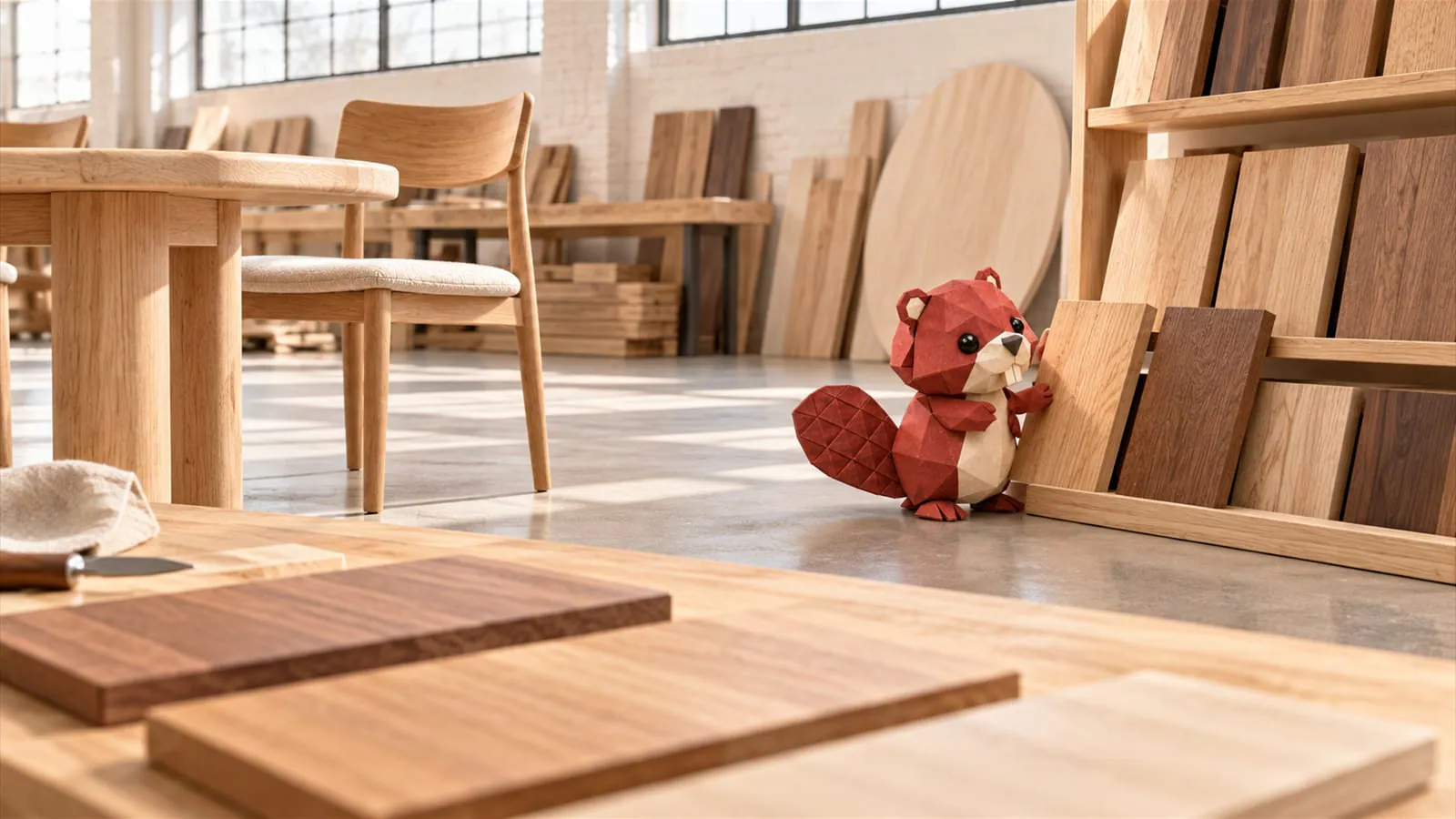
The finish chip is maple. The table is white oak. The stain name matches, but the customer is holding the chip against a tabletop that looks different. A finish sample represents a finish on a particular piece of wood; it is not an exact color guarantee for every board.
The best conversation happens before the order. Show the finish on the specified species, explain the expected range, and record the actual choice. “Natural variation” should describe something the customer has seen and understood, not become the store’s first explanation after delivery.
Why can the same finish look different?
The wood contributes its own color and grain beneath the finish. Even boards of the same species vary. A finish maker’s sample guidance recommends representative wood because the underlying material changes the final appearance.
Preparation and application matter too. A sample made from a different board, sanded differently, or finished under different conditions may show a different result. Sheen and the light falling across a surface affect how the customer sees it. A small chip cannot show every grain pattern across a dining tabletop.
Wood also changes with age. Room & Board’s wood guide describes variation in natural markings and color changes over time. An older showroom sample and a newly made table can therefore tell different parts of the same finish story.
How should the store show a finish honestly?
Show a sample on the actual species, with the finish name, code, and sheen clearly identified. When the maker offers a range of samples, use that range to explain what the customer can expect. Show larger photographs that include the grain across a whole top as well as close details.
In an illustrative sale, the customer is choosing a white-oak table in a smoked finish. Place the white-oak sample beside the table photograph, rather than using the similarly named maple chip. Explain which parts are fixed—the species and finish code—and which vary, such as grain and natural board color.
Baymard’s furniture research shows why material information matters during selection. Pair the pictures with a short, concrete description. “Visible oak grain under a muted brown stain” tells the customer more than “rich, luxurious finish.”
What wording belongs with the sample?
Use wording that explains the material without excusing the wrong specification. For example:
“This sample represents the selected finish on white oak. Natural grain and color vary between boards, and the finished piece may differ from the sample. Pieces ordered separately may also vary in appearance.”
Adapt the statement to the maker’s actual product. Do not describe veneer as solid wood or promise hand-applied variation for a finish produced another way. A finish description belongs with clear swatch images, so the explanation and the visual reference support each other.
The names deserve attention too. “Natural” has a remarkably full calendar across furniture catalogs. Record the maker and finish code, not that word alone.
Can a customer return a table that differs from the sample?
Start by establishing what differs. A normal range of grain is a different issue from the wrong species, wrong finish code, damaged coating, or a result outside what the maker represented.
Compare the delivered piece with the agreed specification, retained sample information, and the maker’s assessment. Ask for photographs in useful lighting, then discuss the actual discrepancy. Return decisions depend on the sale, the store’s terms, and the customer’s rights; a variation statement does not settle every dispute.
Keep the fuller custom-furniture return-policy discussion separate from the material explanation. The customer should not have to work through a policy argument to learn whether the correct finish was supplied.
Should you charge for finish samples?
Choose a sample policy that fits the cost and the decision. A loan library works for reusable boards; a paid sample may make sense when it must be made or shipped specially. If a fee is credited against the order, explain that before collecting it.
Label and track the sample well enough to reconnect it to the sale. A paid sample with an unclear species is still the wrong reference. The service you are providing is a more informed choice.
Will a chair ordered later match the table?
A later chair can coordinate without matching every aspect exactly. The original table may have aged, and different boards or finishing runs can produce visible differences. Ask the maker about the expected match before promising it.
Where matching is important, discuss ordering the group together and retaining the finish reference. That can support consistency, but it does not remove natural variation.
How OrderPilot keeps the finish agreement clear
OrderPilot’s product templates can offer finish values with images and descriptions. Keep the species visible in those descriptions, and carry the selected finish into the order specification. Put the variation wording in the category or template’s additional terms. The customer sees those terms when signing, and the signed record preserves the version they agreed to. For the next catalog review, begin with swatches customers can actually interpret. The sample should start a useful conversation before it has to resolve a difficult one.
Sources
- How to make wood stain samples — Rubio Monocoat USA.
- Wood guide — Room & Board.
- Furniture and home decor UX research — Baymard Institute, December 12, 2024.
Show the finish on the specified species, then explain the variation the customer should expect.













